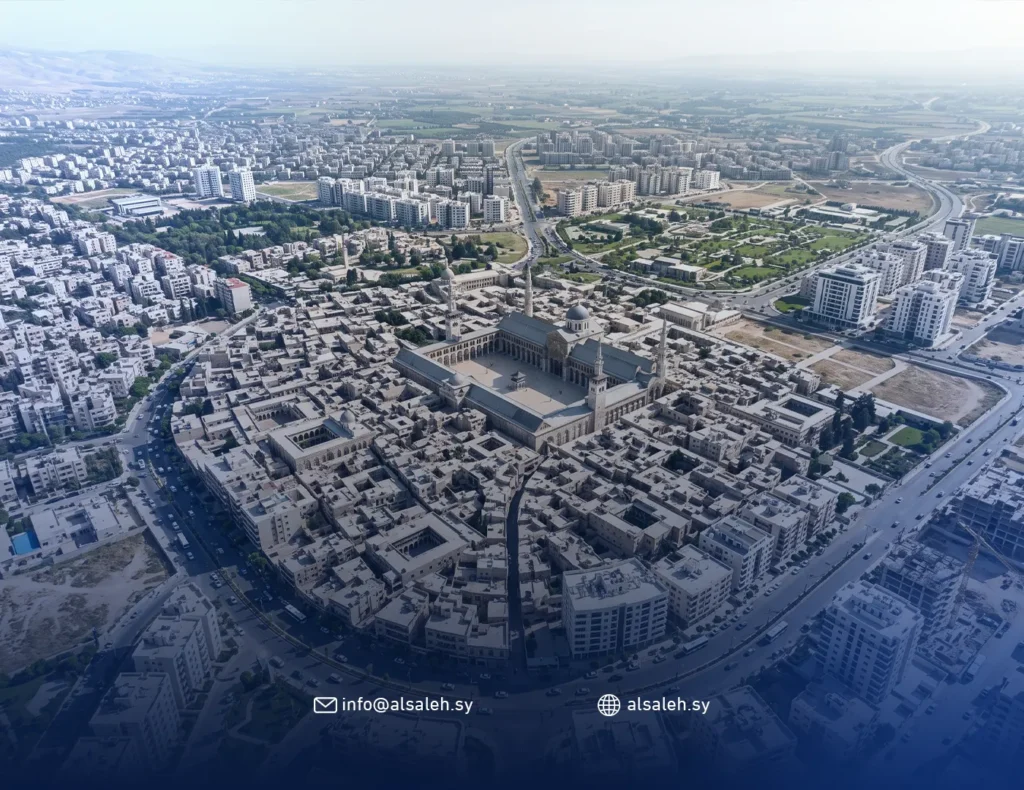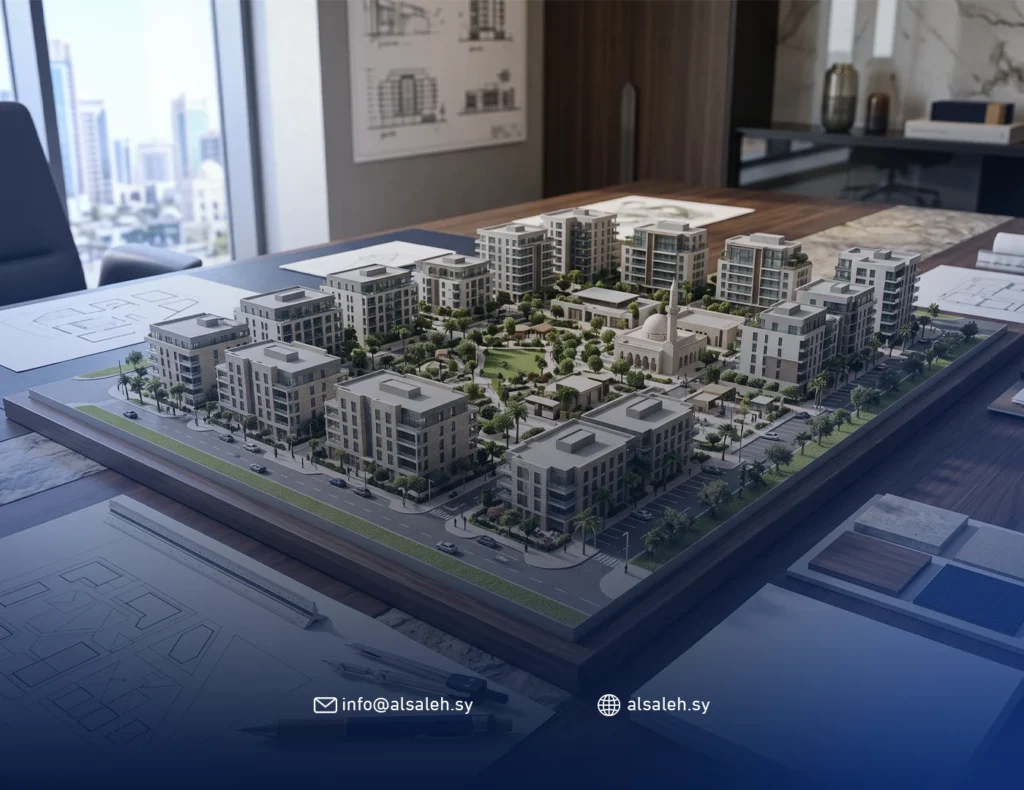

The property market treats the term “reconstruction” as a promise of guaranteed profit. The reality is more precise and more complicated, and a buyer who builds a decision on the headline alone pays a high price for it.
The Scale of the Need: Figures That Put Things in Perspective
The cost of rebuilding Syria’s destroyed assets is estimated at around 216 billion US dollars in the baseline scenario, distributed roughly as 82 billion for infrastructure, 75 billion for residential buildings and 59 billion for non-residential buildings. Aleppo and Rural Damascus are among the governorates most in need of this investment.
But the number that should concern a buyer is not the damage figure — it is the services figure. In April 2026, the World Bank noted that more than half of the water supply infrastructure and around 70% of wastewater treatment plants had sustained severe damage, and that water supply had fallen by roughly 40% compared with pre-war levels.
The practical conclusion: a finished building in an area without stable services is not a complete residential asset, and its market value does not reflect its advertised price.
Three Waves, Not One
It is a mistake to treat reconstruction as a single event. In practice it is three successive waves, each with its own investment logic:
The first wave — repair and restoration. Rehabilitating existing, partially damaged buildings. Less capital, faster returns and lower risk, but limited in scale.
The second wave — reoccupation. Residents returning create immediate demand for rentals, services and local commerce before they create demand for ownership. This is the wave the smart investor reads early.
The third wave — new development. Planned residential and commercial projects. The highest returns, the longest horizon and the greatest risk, entirely dependent on the stability of the regulatory and legal environment.
Zoned Areas: The Opportunity and the Contentious File
A large share of development activity is concentrated in the zoned areas attached to major projects, alongside other zoned areas at relatively lower prices that attract investors with more limited capital.
This file, however, carries a sensitive dimension that cannot be ignored: zoned-area projects established under Decree 66 — among them Marota City and Basilia City — remain subject to claims from the original landowners seeking redress, and organised demands on this issue have surfaced.
What does this mean for a buyer? That asking about the legal status of land in zoned areas is not a procedural detail — it is the core of the investment decision. Do not buy a zoning share or a stake in a zoned area without fully understanding the source of the right, the chain of its transfer, and the status of any existing claims against it.
A Necessary Warning: A Promised Project Is Not an Existing One
There is a recurring pattern in the market since 2025: projects that were previously launched and never completed returning under new names and with new players, in the same locations.
The distinction every buyer must grasp: if a developer tells you handover is in 2030, you are not buying an apartment today — you are handing over your money today in exchange for a promise of an apartment four or more years from now. That is not necessarily a bad decision, but it is an entirely different decision requiring different evaluation and different guarantees.
Review this type of transaction in detail in: Buying Off-Plan: When Is It a Smart Decision?
What Should a Buyer Verify Before Entering Any Reconstruction Project?
A six-point checklist:
- The land’s legal status — who is the registered owner? Are there lawsuit annotations or encumbrances on the property register?
- Zoning status — is the land inside the approved master plan? What is its classification and permitted development ratio?
- The permit — has the building permit actually been issued, or is it “in progress”?
- Services — what is the state of water, drainage and electricity in the area today, not in five years?
- The developer’s delivery record — how many projects have they actually handed over? And when?
- The ownership transfer mechanism — when and how will ownership be transferred into your name in the land register?
In Summary
Reconstruction is a genuine opportunity, but a selective one, not a blanket one. The right area with the wrong document is a failed investment, and the right document in an area without services is a frozen asset.
At Al-Saleh Construction, we do not present a project to a client until its legal and zoning audit is complete, and we put the result of that audit in front of them in writing.
Talk to our team | View our projects
Reference Sources
- Reconstruction cost estimates and infrastructure data — World Bank reports 2026, via Iqtisadi (August 2026)
- Al-Thawra newspaper — Real estate investment report and opportunity map
- The Syrian Civil Movement — Decree 66 and zoned areas file (July 2026)